
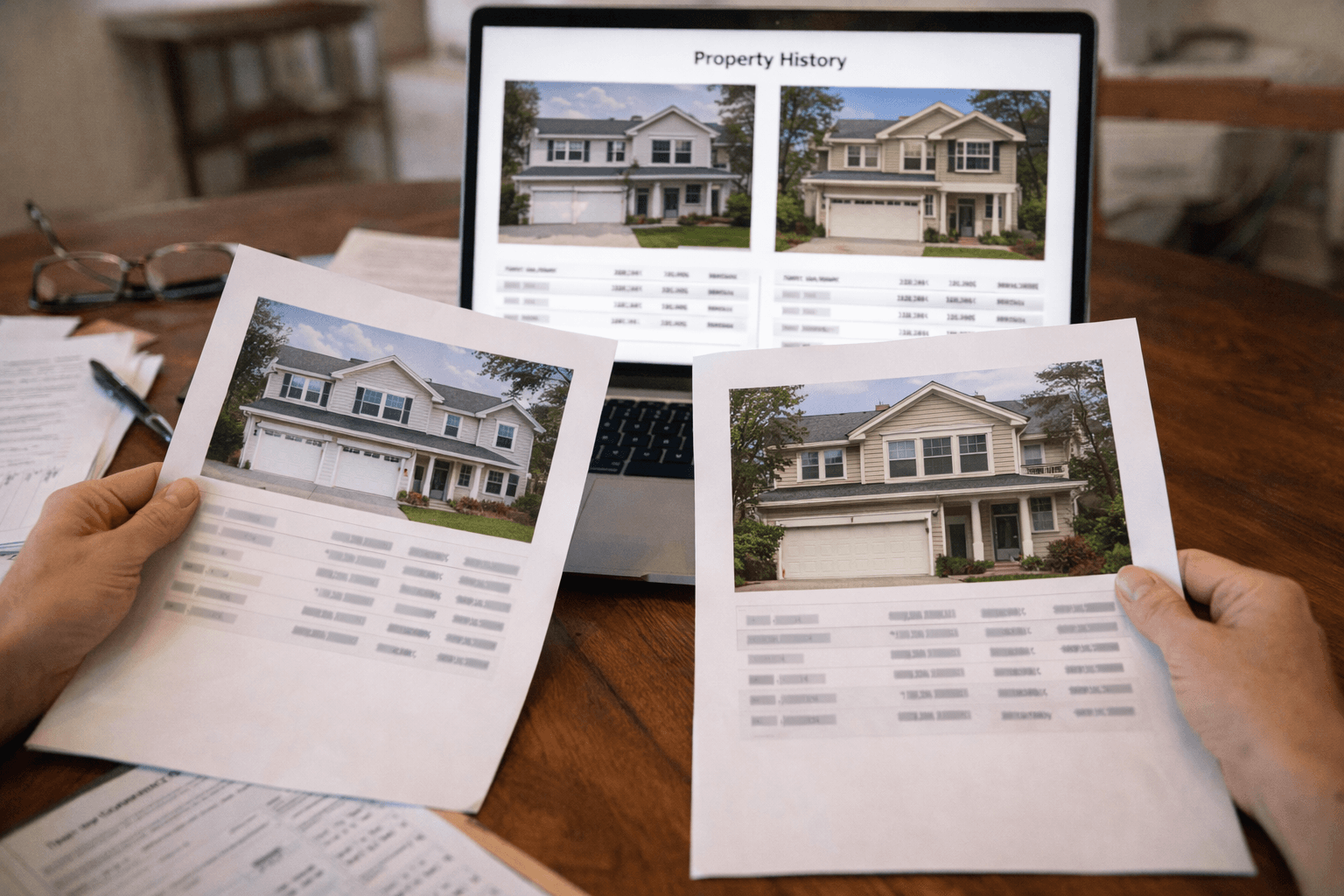
What a stronger comparison looks like
- Layout, finishes, curb appeal, and staging
- The home that feels better in the moment tends to win
- Hidden risk stays underweighted
- Property history, permit confidence, hidden hazard context, and ownership costs
- Each address gets evaluated with the same standard
- The result is a better long-term choice, not just a prettier listing
- Two similar homes can stop looking similar once tax, permit, hazard, and resale patterns are compared
- A stronger comparison method prevents buyers from overweighting staging and underweighting risk
- Better comparisons create cleaner decisions and fewer regret-driven compromises
A better comparison starts with risk-adjusted value
Two houses with similar list prices may not be close in real value once you factor in repairs, tax trajectory, permit uncertainty, and location-related risk.
That is why the best comparison is not just house versus house. It is ownership outcome versus ownership outcome.
The practical question is not which home feels nicer for fifteen minutes. It is which home is more likely to stay a good decision after the hidden costs and hidden work start showing up.
What to compare beyond photos and floorplans
The most useful comparison points are the ones buyers typically discover too late or only after an inspection forces the issue.
- Sale history and whether one home shows fast-flip behavior
- Tax and ownership-cost trends that affect monthly reality
- Permit and renovation documentation confidence
- Hidden hazard or neighborhood context that changes long-term comfort
Use reports to compare homes at the same depth
The comparison is only fair if each home gets the same standard of review. EstateScreener helps buyers evaluate multiple addresses with a consistent lens so one polished listing does not win just because it tells a smoother story.
That consistency matters because buyers are otherwise comparing one home's staging against another home's uncertainty. A structured comparison turns both properties into the same kind of decision problem.
Questions when comparing two houses
- Which home has the cleaner history and lower hidden-risk profile?
- Which house is more likely to cost more after closing?
- If I had to explain my choice with facts instead of emotion, which property wins?
Use EstateScreener before or alongside inspection.
Uncover property history, hidden hazards, ownership cost clues, and seller follow-up questions sooner so your next decision is based on evidence, not momentum.