
EPA guidance makes radon one of the clearest examples of a hidden hazard buyers should not ignore.
- Older homes tend to concentrate lead and asbestos questions
- Certain regions and geologies make radon far more important
- Water-system and contamination context can change what matters most by address
Different homes raise different hazard questions
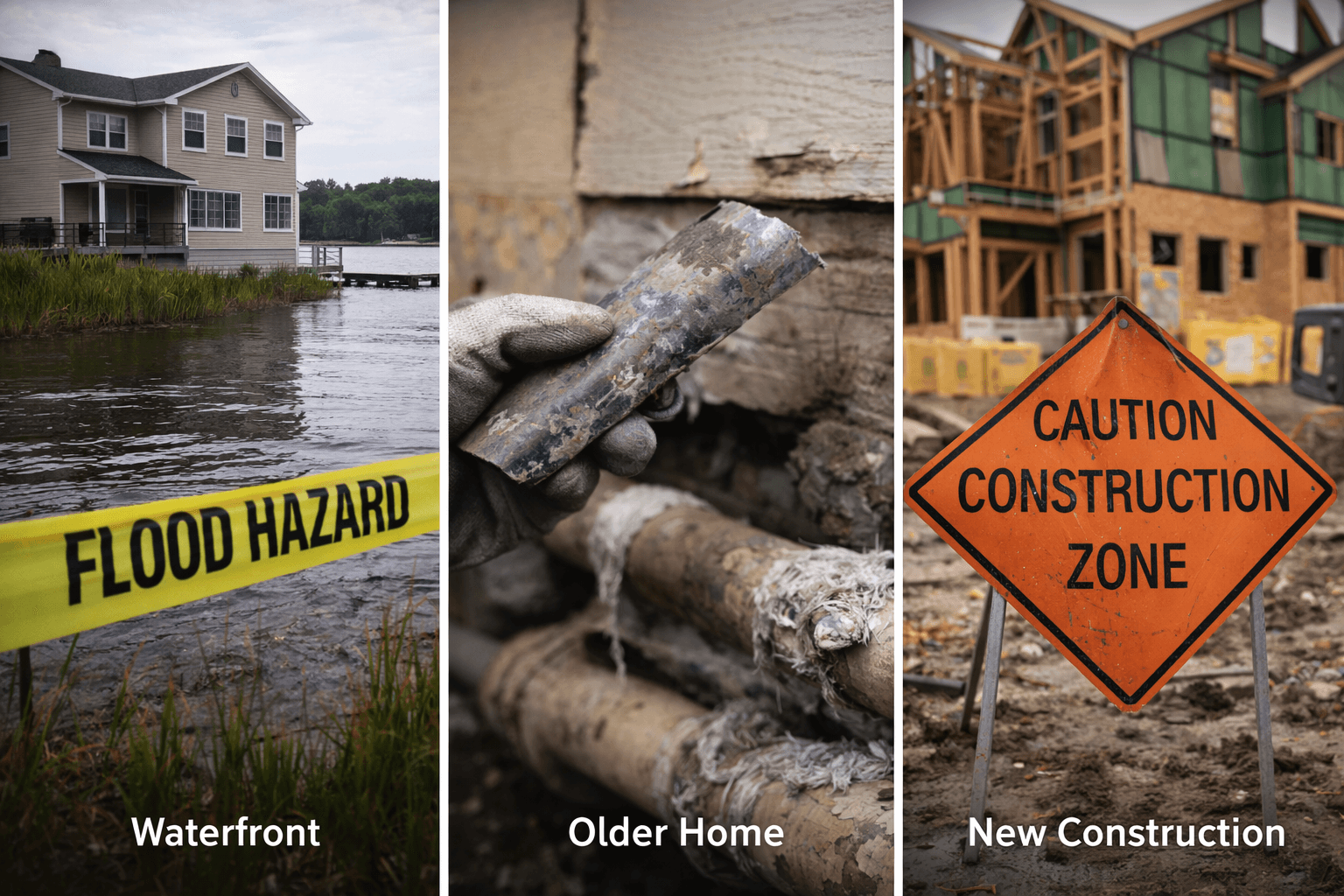
A newer suburban property may push buyers toward flood, moisture, or tax follow-up, while an older home may demand more attention on radon, lead, asbestos, and contamination context. Good due diligence adapts to that reality.
That is why hidden-hazard screening should never be one-size-fits-all. Buyers need a way to prioritize the risks that are plausible for this property, not every risk that has ever affected any property.
How age and location change hazard priorities
Home age often changes material risk. Location changes environmental risk. Together they determine which hidden issues deserve first attention.
A pre-1978 home may justify immediate questions about lead paint. A home in a radon-prone region may deserve testing even if everything looks perfect during a tour. A property tied to a certain water source or local contamination history may raise very different follow-up questions.
- Older homes: lead, asbestos, and aging-system context
- Certain regions: radon or contamination follow-up
- Specific water systems: PFAS and water-quality questions
- Moisture-prone areas: mold and drainage concerns
Why buyers often screen the wrong hazards first
Buyers naturally focus on the hazard names they have heard before, not always the ones most relevant to the address. That can lead to over-focusing on one issue while ignoring another that is more likely, more expensive, or more actionable during due diligence.
A better approach starts with probability and consequence. Which hidden hazards are actually plausible here, and which of them would materially change testing, negotiation, or comfort with the home if confirmed?
Use screening to decide what needs testing
Buyers do not need to test everything on every house. They need to know which hazards are plausible enough to justify specialist follow-up. EstateScreener helps them make that call earlier and more efficiently.
That makes screening practical rather than alarmist. The goal is not to scare buyers with every possible hazard. The goal is to direct attention toward the small set of risks that deserve actual verification before closing.
The best hazard question is always specific to the home
A useful hazard conversation sounds like this: given this home's age, location, water context, and known records, what should we screen first? That question is far more productive than asking whether the home has hidden hazards in the abstract.
Once the question becomes property-specific, buyers make better decisions about testing, seller follow-up, and whether the overall risk profile still fits their budget and comfort level.
Hazard-screening questions to ask
- Which hidden hazards are most plausible for this home's age and location?
- What should be screened now versus tested later during due diligence?
- Would this risk profile still fit my comfort level and budget if confirmed?
Frequently asked questions
Do all homes need the same hazard screening?
No. The most relevant hazard checks change with the home's age, type, and local context.
Why does home type matter?
Because different homes carry different likely exposures, maintenance patterns, and material risks. Better screening starts with the right hazard assumptions.
Should buyers test for every hidden hazard on every home?
Usually no. The smarter approach is to screen first, identify the most plausible risks for that home, and then decide which tests or specialist follow-up are worth the time and money.
What makes a hidden hazard important enough to investigate?
A hazard matters most when it is plausible for the property's age or location and would materially affect health, cost, negotiation, or your willingness to proceed if it were confirmed.
Use EstateScreener before or alongside inspection.
Uncover property history, hidden hazards, ownership cost clues, and seller follow-up questions sooner so your next decision is based on evidence, not momentum.